
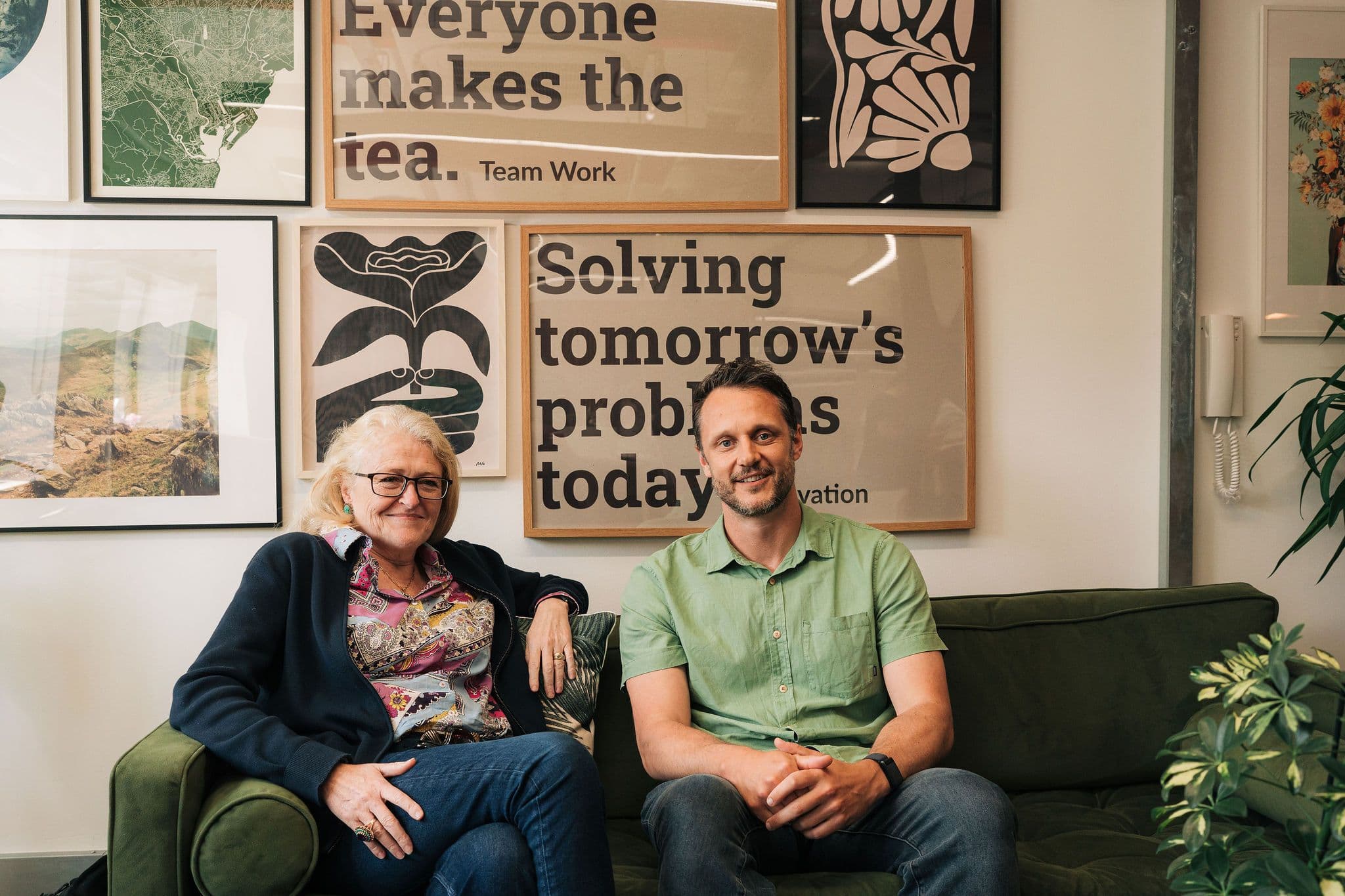
The announcement
On 25th February 2026, Sero — the Cardiff-based energy services company — confirmed that the Innovation Investment Capital Limited Partnership (IIC) had made a significant investment in the business. IIC is a £50 million fund backed by Cardiff Capital Region, focused on scalable enterprises delivering measurable environmental and social impact across South East Wales.
The investment will accelerate Sero's deployment of energy efficiency solutions across social housing, deepening its partnerships with housing providers and expanding the commercial infrastructure supporting its growth. Sero currently works with local councils and housing providers on around 2,500 homes across the UK, with a further contracted pipeline of up to 10,000.
What Sero does — and why the model matters
Sero is not a retrofit contractor in the conventional sense. It is an energy services company built around a shared-savings model: working with social housing landlords to deliver energy-efficient, net-zero homes at scale, while structuring the economics so that both sides of the relationship benefit. Residents receive lower bills and warmer, more comfortable homes. Landlords unlock new income streams, improve their housing stock, and attract private finance against a credible long-term revenue model.
The technology blend — Solar PV, batteries, flexibility services, and proprietary energy management capability — is in service of that commercial model rather than an end in itself. This is an important distinction. There is no shortage of retrofit technology in the market. There is a significant shortage of businesses that have structured the economics of net-zero social housing in a way that works for landlords, residents, and investors simultaneously and at scale.
Sero has done that work. The IIC investment is, in part, a validation of it.
Why regional institutional capital is a meaningful signal
It would be easy to read this as a straightforwardly positive local investment story — a Welsh fund backing a Welsh business with strong social and environmental credentials. That reading is accurate. It is also incomplete.
The Cardiff Capital Region's investment mandate is oriented toward scalable enterprises with demonstrable commercial and societal outcomes. IIC does not invest in early-stage ambition. It invests in growth-stage businesses with validated models, contracted pipelines, and the organisational credibility to deploy capital effectively.
Kellie Beirne, CEO of Cardiff Capital Region, described backing Sero as reflecting their strategic support for local companies that use innovation to deliver both commercial and societal outcomes, pointing specifically to Sero's growth trajectory and its contribution to improving housing stock energy performance.
That framing matters. This is not impact capital accepting commercial trade-offs. It is institutional capital that has concluded Sero's model generates sufficient financial credibility to warrant backing on investment terms — while also delivering the environmental and social outcomes the fund is structured to support. In a market where the alignment of those two things is frequently asserted and rarely demonstrated, Sero's ability to attract this type of capital on these terms is significant.
The wider context: social housing and the Warm Homes Plan
The investment arrives at a moment of considerable policy momentum for the sector Sero operates in. The UK government's Warm Homes Plan has created a clearer framework for the energy efficiency upgrade of social housing stock, and with it a clearer signal to developers, landlords, and investors about where the policy environment is heading.
Laura Sandys, Chair of Sero, noted that the investment reflects Sero's commitment to retrofitting social housing and addressing energy efficiency for those most in need — and that the CCR fund's backing would support growth in line with the government's Warm Homes Plan ambition.
The context is relevant beyond the policy headline. Social housing providers are under sustained pressure: regulatory requirements on energy performance are tightening, residents are experiencing genuine fuel poverty at scale, and the capital requirements for upgrading ageing housing stock are substantial. The businesses that can help landlords navigate all three dimensions simultaneously — performance, affordability, and finance — occupy a genuinely valuable position in the market.
Sero's 10,000-home contracted pipeline is the clearest evidence that social housing providers are reaching that conclusion in practice, not just in principle.
A note on what this reflects about Sero's growth stage
At IMCC, we work with businesses at the point where the market opportunity is established and the commercial model is validated, but the next phase of growth requires something the business has not previously needed to build: the communications infrastructure, investor narrative, and stakeholder credibility to operate at a new scale.
Sero is entering that phase. The IIC investment is not the ceiling of their ambition — it is the foundation of the next stage of it. With a contracted pipeline of up to 10,000 homes and a model that institutional capital has now validated publicly, the work ahead is about maintaining narrative consistency across an expanding set of audiences: capital providers, housing association partners, regulators, and the communities the business serves.
James Williams, CEO of Sero, described the investment as driven by a clear alignment between CCR and Sero around innovation, bill reduction, carbon, and resident outcomes. That alignment — between what Sero does and how it is understood by the investors and partners it needs to grow — is precisely the kind of thing that has to be actively maintained as the business scales.
We are proud to be supporting Sero as they do that.