
Great technology has a habit of dying unnoticed. I say that often enough that people assume I am talking about failure. I am not. I am talking about competence: a good idea, built well, backed by real money, that never finds its audience because nobody thought to build one.
We are living through another technology revolution, in AI, energy, space, defence, robotics, quantum. The engineering is often extraordinary and the money behind it is real. What I keep noticing, having watched more than one of these cycles now, is how many businesses in the middle of it repeat one of the oldest mistakes going. They invest everything in the technology and next to nothing in the voice around it.
Xerox gave the future away
History has already run this experiment once, at a scale most businesses can only dream of.
In the 1970s, researchers at Xerox PARC built the Alto, a computer with a graphical interface, a mouse and a working version of the office network we now call Ethernet, roughly a decade before any of that reached the rest of the world. In December 1979, Steve Jobs and a group of Apple engineers were shown round the lab. What they saw became the basis for the Lisa, and then the Macintosh.
Xerox had the thing first. It just never told anyone what it had. The commercial version, the Xerox Star, launched in 1981 priced above sixteen thousand dollars, sold modestly, and slipped out of the story. Apple built the same idea into a product with a case built around it, and a launch built to make people pay attention. The book that chronicles this, Fumbling the Future, gets the title right: Xerox did not lose the personal computer. It fumbled it, in full view of the one competitor who knew exactly what to do with what he had seen.
What "poor marketing" actually means
CB Insights once studied 101 start-up post-mortems, hunting for the reasons founders gave for shutting down. 14% blamed poor marketing outright. 29% ran out of cash. 19% said they got outcompeted.
What's harder to see in the numbers is how many of those businesses might have survived if more people had known what they were building, understood it, and believed in it before the money ran out.
This is where the word marketing gets us into trouble. People hear it and picture a logo, a website, an advert. I mean something larger: a clear story, the discipline of keeping investors and partners engaged, the work of building a reputation before you need one. In other words, a voice.
The prototype nobody heard about
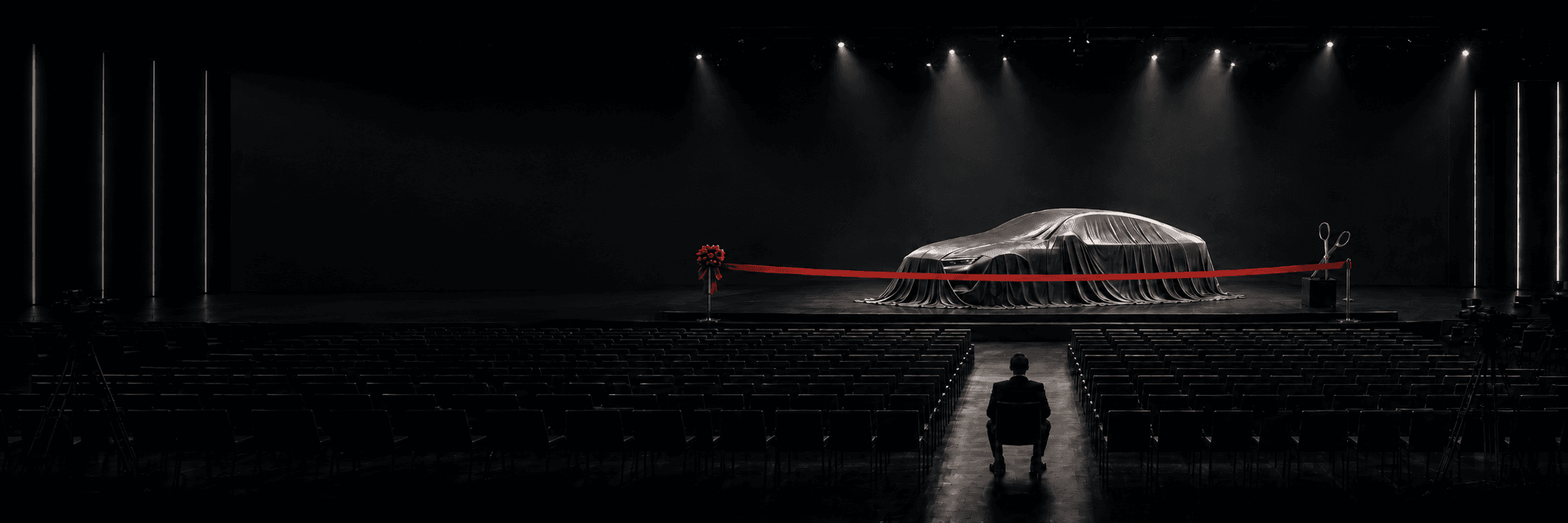
I have watched this play out closer to home, and less happily. A technologist I know had a genuinely good idea, convinced investors to back it, and spent nearly everything they had building a working, life-size prototype. It worked.
The first mistake was the unveiling. There was no noise around it, when it could have built publicity, credibility, even further investment. Instead, silence. The second mistake came next: the prototype was tested with no acclaim and no press at all. Proof, credibility, trust, awareness, all of it went unused. Investors moved on. Customers never arrived. A genuinely good piece of technology disappeared, the way Xerox's did, only faster, and with far less money behind it.
Build the environment, not just the invention
I understand the instinct at every stage of a build like this. Make the technology better. Hire another engineer. Ship another feature. Shave out another inefficiency. More. More. More.
What gets missed is that building the technology and building the environment it needs to survive are not two jobs done one after the other. They are the same job. Your narrative, your reputation, the relationships you keep with the people who might one day fund you, buy from you or champion you, are not decoration added once the real work is done. During a revolution like this one, obscurity is not a footnote. It is a business risk, the same size as a bad balance sheet or a failed test.
You can have the best technology in the world. If nobody knows you exist, that may not be enough to save you. Common sense, perhaps. Sadly, not commonly done.