
Louis Borders had already won once. He and his brother Tom built the bookshop chain and sold it to Kmart in 1992 for $125 million. In 1996 he started something bigger: order your groceries online, have them delivered to your door inside a half-hour window you chose. Obvious now. Close to unimaginable then. Investors backed him with close to $800 million, on the strength of a founder who had already cashed out once before.
The idea was incredible, but the size of the bet placed on it led to Webvan's downfall.
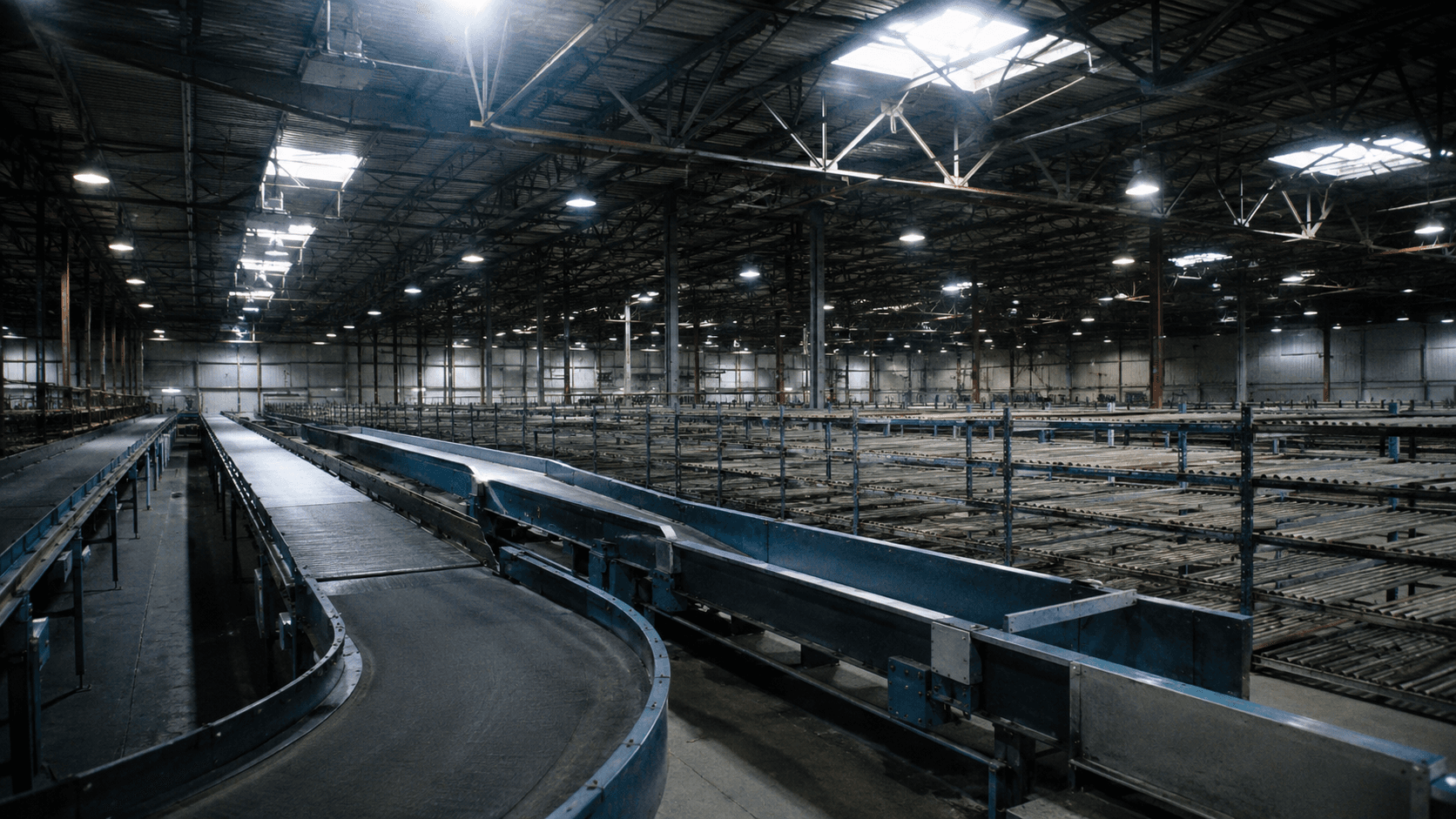
Rather than prove the model in one market and let the numbers argue for the next, Webvan built for the market it was sure was coming. It signed a $1 billion contract with Bechtel to construct vast automated warehouses and set out to reach 26 markets. 'We were busy demonstrating failure in the Bay Area while we expanded into other regions,' said Mike Moritz, a Webvan board member and Sequoia Capital partner. It went public in November 1999 at a valuation north of $4.8 billion. The stock closed 65% up on its first day, priced against cumulative sales of less than $400,000.
Then the warehouses sat waiting for orders that arrived too slowly to fill them. Groceries run on margins of 1% to 2%, so covering that fixed cost needed enormous volume, and the volume was years away. In 2000, its best year, Webvan took $178.5 million in sales and spent $525.4 million to do it. It reached 10 of its planned 26 markets. In July 2001, 20 months after the float, it filed for bankruptcy, losing more than $800 million and cutting 2,000 jobs. The plastic delivery tubs ended up in people's garages.
What makes it sting is that Webvan was right. A decade on, ordering groceries online was ordinary, and the people who collected on that were the ones who had watched Webvan pay to prove it. Jeff Bezos hired four former Webvan executives, Doug Herrington among them, to build Amazon Fresh. The sharper irony sits in the warehouse. Mick Mountz, who ran picking and packing at Webvan, had watched staff burn most of their shift just walking the floor. He later built Kiva Systems to fix exactly that, robots that bring the shelf to the worker. Amazon bought Kiva in 2012 for $775 million and made it the backbone of its own warehouses. Webvan funded the experiment; Amazon booked the return, twice over.
The lesson is not that ambition is the mistake, or that a good story doesn't matter. Webvan's story was good enough to raise the money it needed. What ambition and a good story don't do is size the market you're actually standing in. Build for tomorrow's scale while today's market is still paying the bills, and the better idea can still lose. Serve the market in front of you, at the size it actually is, and earn the right to build the next one. Get the sequence wrong, and being right doesn't save you.
None of this needed the benefit of hindsight. The market Webvan actually had in 1999, how many households would pay for it that year, not five years later, was knowable before the Bechtel contract was signed. Sizing that honestly, and sequencing expansion to the evidence rather than the ambition, is unglamorous, upstream work, easy to skip when the vision is this good. It is also the work that decides, long before the first warehouse goes up, whether being early makes you the winner or just the company that paid to prove someone else's business.