
Your website makes perfect sense to you. You know what your company does, so when you read it your brain fills in everything the words leave out. Your buyers, your investors or anyone who's just curious don't have any of that. They come away only half understanding your business. Then their boss or colleague asks what you actually do and why you matter, and they start with 'I think...' or 'my understanding is...'. You're not part of that conversation, so you can't correct them or fill in what they've missed. Do you really want your company's credibility to come down to whatever they 'think' or 'understand'? Sounds like a big risk.
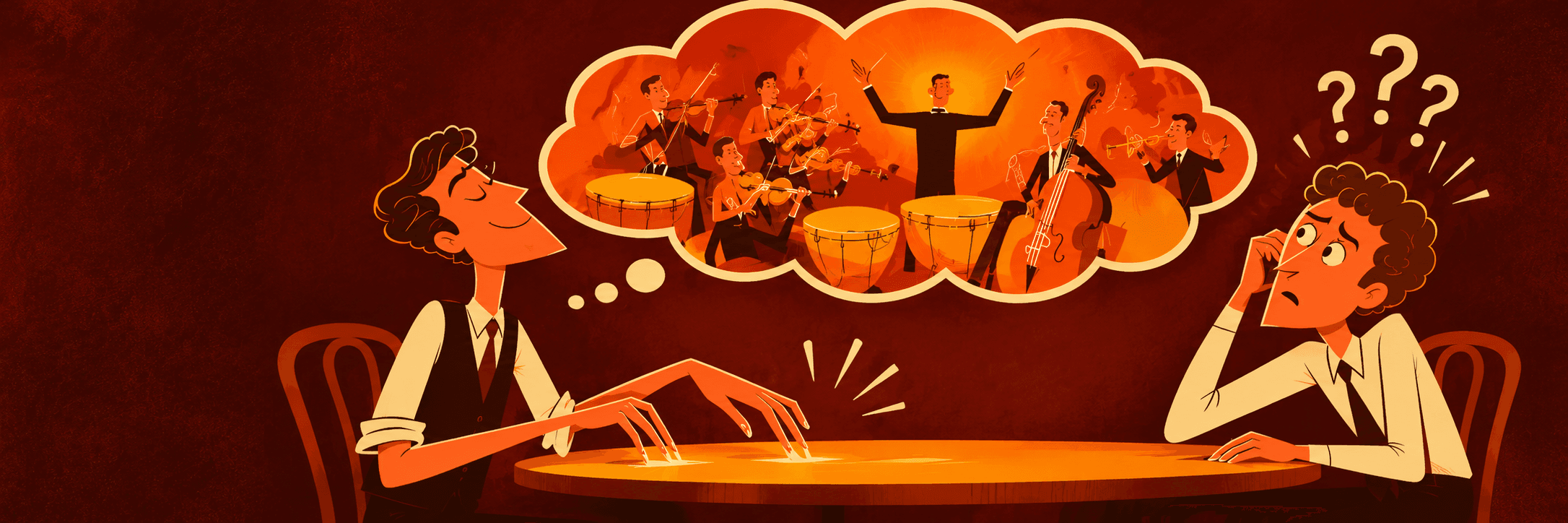
The issue is that it's really hard to tell when your message isn't getting through. You'd expect the person who knows the most to be the best judge of how clear they are, but in 1990, Stanford researcher Elizabeth Newton found the opposite. She paired up 80 students. In each pair, one picked well-known songs from a list (anything from 'Silent Night' to The Flintstones theme song) and tapped out the rhythm for the other to guess. The tappers predicted their partners would get about half right. They got 3 out of 120.
Newton's explanation was that the tappers kept hearing what she called their 'personal musical accompaniment'. They heard a song, but their partners just heard knocking.
Obviously she was studying songs, but at The IMCC we see the same gap whenever a company reads their own work, from the website to their LinkedIn posts. You hear the tune: the years of customer conversations behind every line, the prototypes that failed, and the nights you spent wondering if it would ever work. Everyone else just hears knocking.
And now there's a new listener in the room. More and more people now ask AI to sum a company up in a page, but the thing is AI only knows what's been written down. If the tune isn't there in black and white, it might as well not exist.
The obvious fix here is to sit down and try to read the website like a stranger would. That makes sense, but the research isn't kind to it.
The reason is 'the curse of knowledge': once you know something, it's very hard to imagine not knowing it. A 1989 study of the same name put it to the test. One group was shown the earnings of eight companies, then asked to guess what a second group (who hadn't seen them) predicted. They were paid for every guess that came close, so they had every reason to set aside what they knew. They couldn't fully do it and their guesses still drifted towards the real numbers. Later studies found that warning people about the bias in advance doesn't fix it either.
That leaves the people who know your business best, you and your team, poorly positioned to judge what your website says to someone who doesn't. You can't un-hear the tune, so borrow someone else's ears. Give your website to someone in your target audience who has never met you, then ask them what you do. Listen for 'I think'.
If you'd like an outside view of how the market sees your business, our Clarity Review is where we start. You can find out more through our contact page.