
The constraint nobody built a slide for
For most of the past decade, the energy transition narrative has been driven by two things: technology cost curves and capital availability. Both have moved in the right direction. Solar and wind have become the cheapest forms of new generation in most markets. Investment has scaled dramatically. The political commitment, in Europe at least, has held.
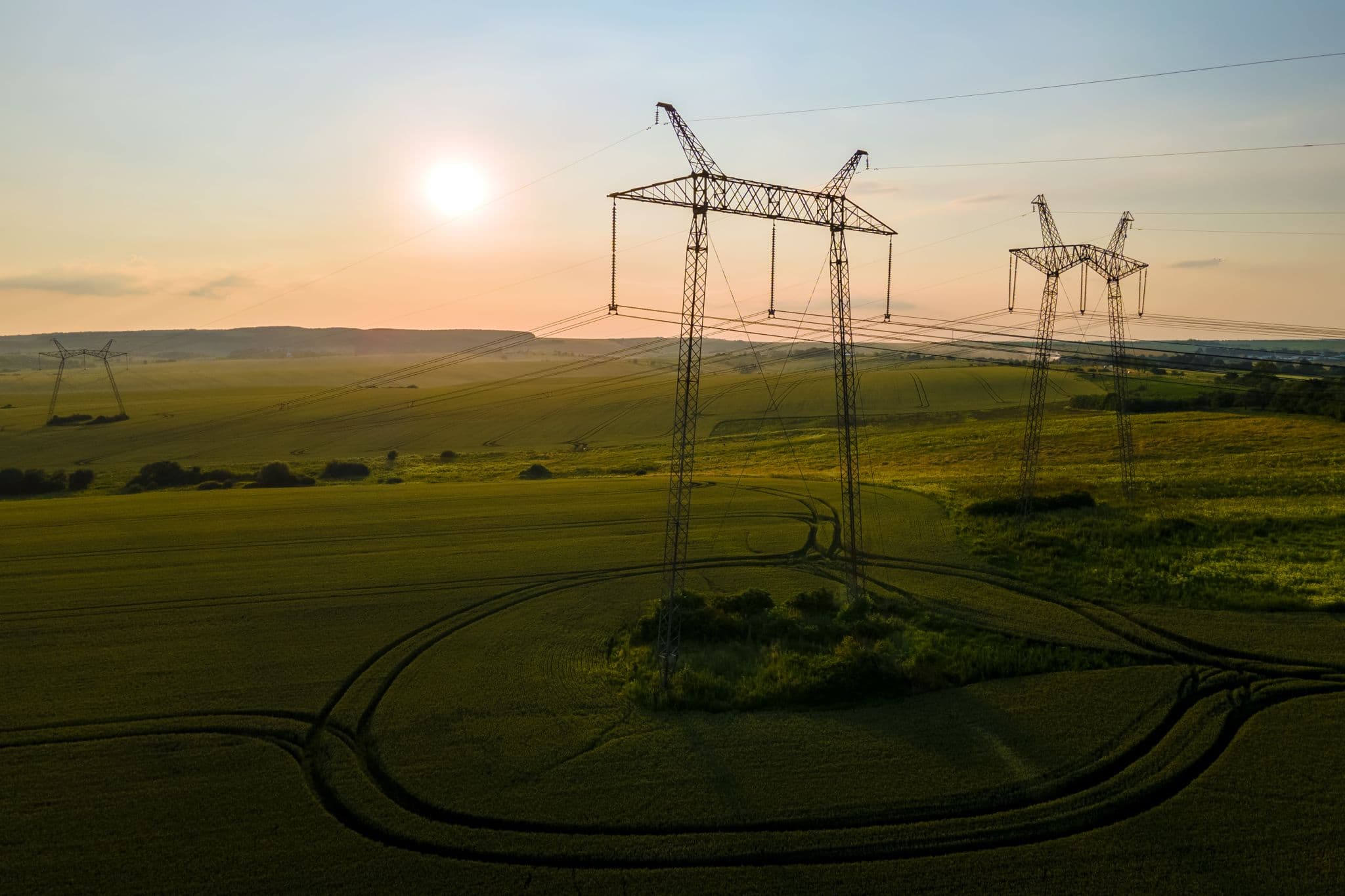
What the narrative consistently underweighted was infrastructure. Not the glamorous kind — not the turbines or the panels or the battery systems that attract attention and headline investment. The unglamorous kind. The cables. The substations. The grid connections that determine whether a technically ready project can actually deliver electrons to the system.
In many markets, this constraint has now become the primary limiting factor on transition speed. Projects are ready. The grid is not. And the queue of projects waiting for a connection date has grown to a scale that, in the UK at least, makes the problem impossible to ignore.
The UK queue as a diagnostic
The UK makes the problem unusually visible. The connections queue now exceeds 700GW — a figure that dwarfs the country's actual generation requirements and stands as clear evidence that the first-come, first-served model that governed grid access for decades has broken down entirely.
Within that queue are projects that have waited up to 15 years for a connection date. Developers that have committed land, planning resource, and capital to projects they cannot bring to market. Assets that are technically sound and commercially viable, held in suspension not by any failure of engineering or finance, but by a coordination system that was never designed to handle transition-scale demand.
This is not a technology failure. The technology exists. It is a coordination failure — a mismatch between the pace at which the market has been able to develop projects and the pace at which the regulatory and infrastructure frameworks have been able to absorb them.
Regulators are responding. NESO and Ofgem are moving away from the first-come, first-served model and replacing it with a readiness-based approach that prioritises projects with planning approvals in place, land rights secured, and credible delivery timelines they can demonstrate to the satisfaction of a regulator whose tolerance for speculative queue-holding has reached its limit. Simultaneously, they are actively removing dormant applications that have occupied queue positions for years without progressing.
The direction of reform is correct. But it changes the nature of project risk in ways that most developers have not yet fully priced in.
What the shift to readiness-based allocation actually means
Under the old model, the primary advantage was timing. Getting an application in early — ahead of competitors, ahead of demand, ahead in some cases of meaningful project development — conferred a queue position that could itself become a commercial asset. The system rewarded speed of application, not depth of readiness.
Under the emerging model, that logic inverts. Queue position is no longer sufficient. Regulators are now asking developers to demonstrate, at the point of allocation and through the development process, that their project is genuinely ready to proceed — that the planning approvals are real, the land rights are secured, the delivery timeline is credible, and the organisation behind the project has the capability to execute it.
Readiness, in this context, is no longer purely an engineering standard. It is a communications and organisational one. A project that meets the technical threshold for readiness but cannot demonstrate that credibly — to a regulator, to a planning authority, to a capital provider conducting diligence — is not, in any operationally meaningful sense, ready. The evidence of readiness has to be legible. It has to travel. It has to hold up under scrutiny from stakeholders who are evaluating dozens of competing projects and have limited time to develop familiarity with any of them.
The developers who are navigating this well aren't just the ones with the strongest projects. They're the ones who understood early that demonstrating readiness to a regulator is a completely different capability from achieving it. You can have everything in place and still lose ground to a project that communicates its position more clearly.
Head of Regulatory Affairs, European renewable energy developer
Most technical teams are not built to deliver this. They are built to solve engineering problems — to optimise generation capacity, manage grid interface requirements, navigate the technical aspects of planning. The structured stakeholder communication that the new regulatory environment demands: the clarity of narrative across regulatory, planning, and investor audiences; the consistency of positioning across parallel processes; the ability to translate technical credibility into organisational credibility for audiences who do not share the technical vocabulary — these are not capabilities that emerge naturally from project development teams. They have to be deliberately built.
The three audiences that now determine project velocity
The shift to readiness-based allocation has, in effect, created three distinct audiences whose confidence a developer must maintain simultaneously — and whose requirements are meaningfully different from each other.
Regulators need to see that a project is genuinely ready to proceed and that the organisation behind it has the structured discipline to deliver against a timeline. They are no longer willing to hold queue positions for projects that cannot demonstrate this. The communication they require is precise, evidence-based, and consistent over time.
Planning authorities operate on longer timescales and are evaluating community impact, environmental credibility, and the developer's track record of engagement as much as technical compliance. The narrative they need to hear is one of organised, structured, accountable delivery — not just engineering competence.
Capital providers — particularly the institutional investors whose participation is essential at the scale the transition requires — are conducting diligence on project credibility as much as project economics. They need to form a confident view of delivery risk, and that view is formed primarily through how clearly and consistently the developer represents their position.
These audiences are not aligned on timing, vocabulary, or the specific evidence they find persuasive. Serving all three simultaneously, across a development process that can span years, requires a communications infrastructure that most project teams have never needed to build before.
The infrastructure gets built with steel and cable. The licence to build it gets won with clarity and credibility — and right now, most developers are spending a lot more time on the steel and cable.
Phil Harvey, Client Partner, IMCC
The organisations that will move fastest
The energy transition will not be constrained by ambition or capital indefinitely. The reform process underway in the UK — and the equivalent processes moving at varying speeds across European markets — will, over time, clear the coordination failures that have accumulated in the system.
The question for developers operating in this environment is not whether the system will improve. It is who captures the advantage as it does.
The organisations that will move fastest are not necessarily those with the best-engineered projects, though engineering quality remains foundational. They are the ones that recognised early that readiness is a whole-organisation standard, not a technical one — and that built the narrative clarity, stakeholder communication infrastructure, and regulatory credibility to demonstrate it, before they needed to.
In infrastructure, the licence to build is won long before the spade enters the ground. The developers who understand this are not just better positioned for the current regulatory transition. They are building an organisational capability that compounds with every project they deliver.